
Journey
Bukhara — The holy city of the sands

The holy city of the sands

Bukhara

A living medieval city where the trading domes still trade.

Bukhara doesn't perform its history; it just continues it. The city was Central Asia's center of religion and scholarship for a thousand years — 'the noble Bukhara', the place that produced Avicenna and buried emirs — and unlike its louder sister Samarkand, its old town survived nearly whole.

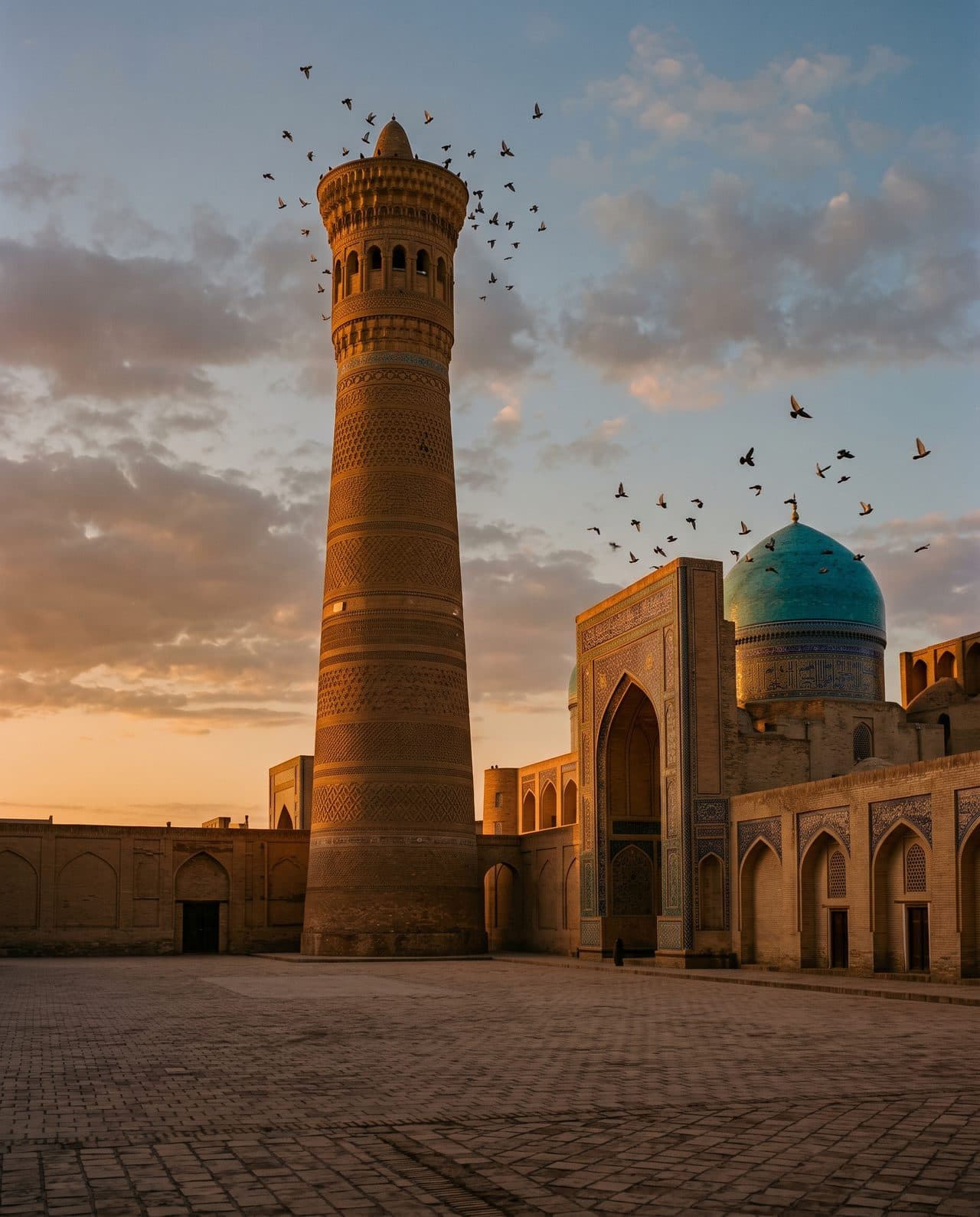
This is a city measured in footsteps: from the Ark fortress, past the Kalyan minaret that Genghis Khan spared because it made him look up, through trading domes where money-changers sat eight hundred years ago and where miniature painters and blacksmiths sit today.

Stay inside the old town if you can. Bukhara's best hour is after the day-trippers leave, when the Lyab-i Hauz pond goes still, the plane trees hold the last light, and the city remembers it is very, very old.

Worth your hours

What to see in Bukhara

Po-i-Kalyan complex

The 47-meter Kalyan minaret has stood since 1127; the mosque and the still-working Mir-i-Arab madrasa complete the ensemble that is Bukhara's heart.

Tip · The rooftop cafés opposite give the classic dusk view — arrive before sunset, stay after.
The Ark fortress

A raised royal town-within-a-town, home to Bukhara's rulers for over a millennium, with the emir's coronation court intact.

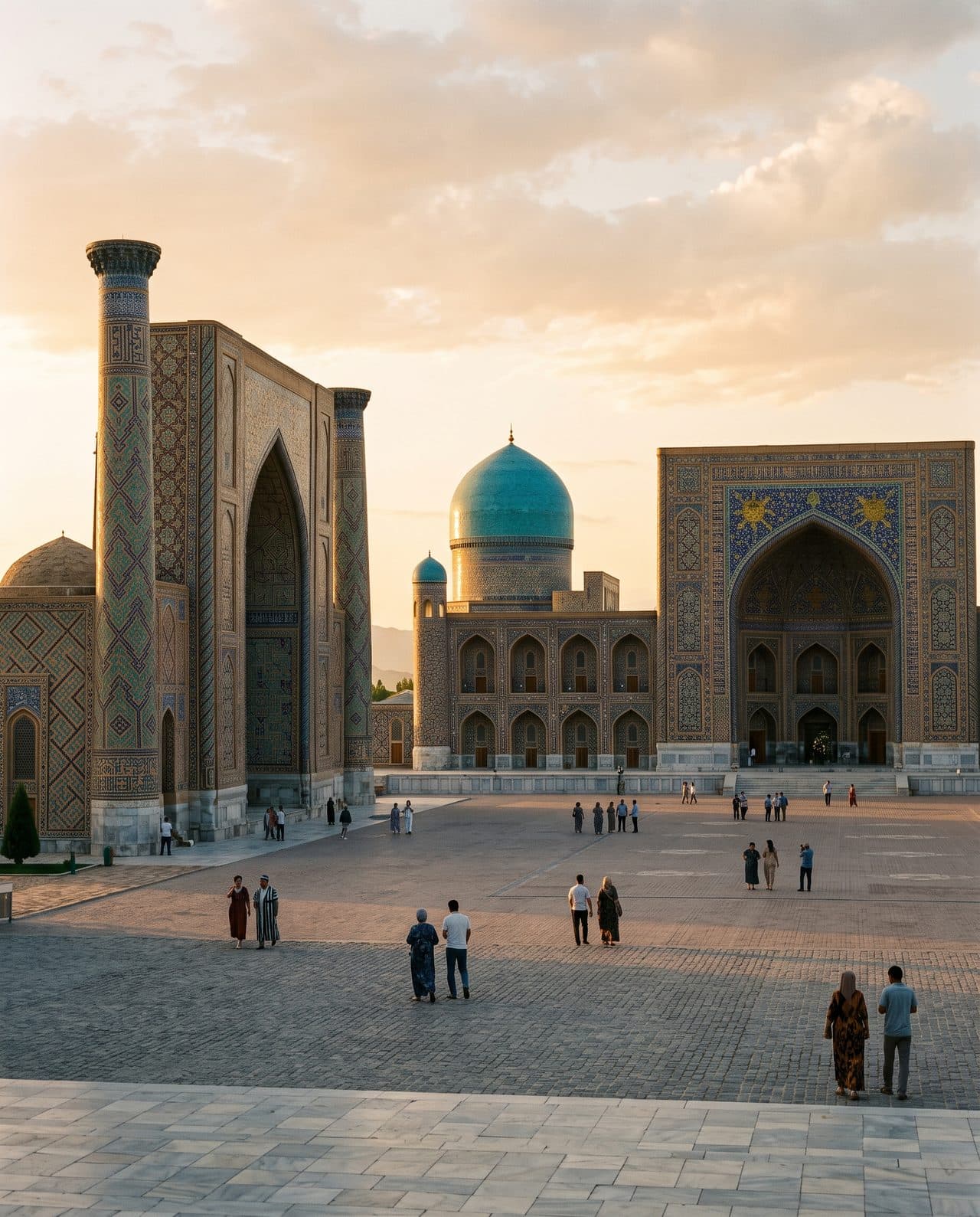
Tip · The ramparts are best photographed from Registan square below in late light.

Lyab-i Hauz

The 17th-century pond framed by mulberries and madrasas — Bukhara's living room. Chess, tea, and the statue of Hodja Nasreddin on his donkey.

Tip · Breakfast here before the heat; dinner after the coaches leave.

Chor Minor

A four-towered gatehouse hiding in the lanes, each turret tiled differently — the city's most improbable little building.

Tip · It's a ten-minute walk east of Lyab-i Hauz; go on foot and get slightly lost.

Trading domes

Toqi Zargaron, Telpak Furushon, Sarrafon — vaulted crossroads bazaars built for jewelers, hatters, and money-changers, still selling silk, scissors and miniatures.

Tip · Suzani embroidery here is often better priced than in Samarkand — check the reverse side for hand stitching.

Sitorai Mokhi-Khosa

The last emir's summer palace: Russian chandeliers meeting Bukharan ganch carving, plus a garden of strutting peacocks.

Tip · A short taxi north; combine with a slow afternoon rather than a rushed morning.

At the table

Eat like it matters

  • Plov Osh-i Sofi

    Bukhara's wedding plov, sweeter with raisins and served with quail eggs at the dedicated plov centers.

  • Shashlik at Lyab-i Hauz

    Charcoal lamb by the pond — simple and correct.

  • Nishalda

    Whipped egg-white and sugar cream flavored with herbs; a Bukharan specialty around Navruz.

  • Green tea with sweets

    The chaikhana ritual: a pot, a bowl of sugared almonds, and no hurry whatsoever.

The practical truths

Before you go

Season
April–early June and September–October. Summer is fierce (over 40°C in July); winters dip below freezing but the brick city glows in low sun.
Getting there
Afrosiyob from Tashkent ~3h50m or from Samarkand ~1h40m. The station is in Kagan, 15 minutes from the old town by taxi.
Local customs
  • Mir-i-Arab madrasa is a working seminary — admire the courtyard from the portal unless invited further.
  • Bargaining in the trading domes is expected but gentle; start around two-thirds.
  • Friday midday prayers make mosque visits briefly awkward; plan monuments accordingly.