
Journey
Fergana Valley — Where the crafts never stopped

Where the crafts never stopped

Fergana Valley

Silk, ceramics and the greenest corner of the country — the workshop of Uzbekistan.

Ringed by mountains and stitched with canals, the Fergana Valley is Uzbekistan's orchard and its workshop. A third of the country lives here, and it can feel like all of them are making something: silk in Margilan, ceramics in Rishtan, knives in Chust, bread in Kokand that locals will defend with genuine heat.

This is the part of the country where craft never became a museum piece. The ikat ateliers of Margilan still tie their patterns into the warp before dyeing — a form of controlled prophecy — and Rishtan's potters still grind their ishkor glazes from desert plants, firing that particular blue the valley has owned for eight hundred years.

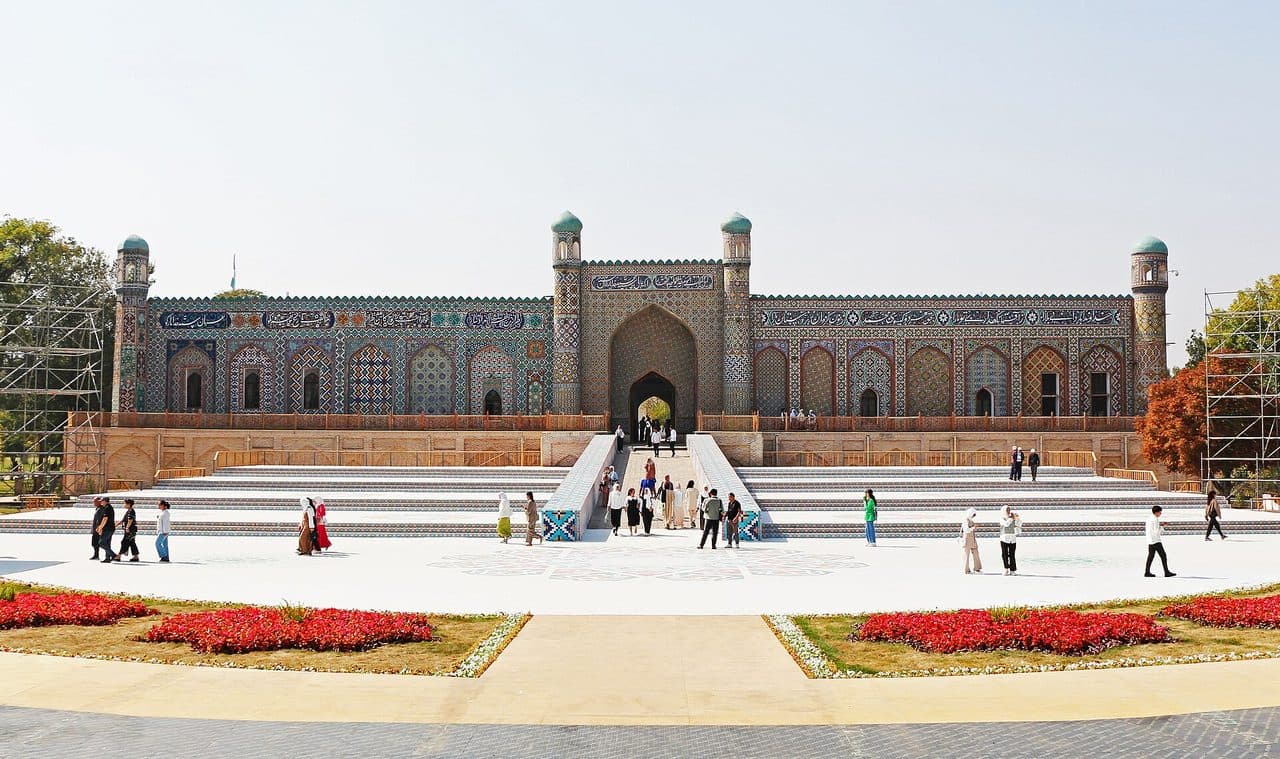
Between workshops, the valley offers Kokand's khan's palace — a tiled boast from the last days of the khanate — and a road back to Tashkent over the Kamchik Pass that counts as scenery in its own right.

Worth your hours

What to see in Fergana Valley

Margilan's ikat ateliers

Watch silk go from cocoon to warp-tied pattern to shimmering cloth at the Yodgorlik factory and family workshops — the whole alchemy in one courtyard.

Tip · Buy adras (silk-cotton) for wearing, pure silk for the wall; both cost a fraction of Tashkent prices.
Rishtan ceramics quarter

A whole town of potters' dynasties. The masters' home workshops fire the famous ishkor-glaze blue that collectors cross continents for.

Tip · Ask to see the kiln, not just the showroom — the families are proud of the process.

Khudayar Khan Palace, Kokand

The last khan of Kokand built himself a 113-room tiled statement in 1873; the facade alone justifies the detour.

Tip · Morning light hits the front tiles; the small museum inside is 30 minutes well spent.

Kamchik Pass

The 2,268-meter road link between Tashkent and the valley — switchbacks, tunnels and sudden alpine views.

Tip · Sit on the right side driving east; the train tunnels under it if you prefer the rails.

Chust knife and skullcap makers

The valley's other signatures: hand-forged pichok blades and the black-and-white doppi worn across the country.

Tip · A knife needs checked luggage; a doppi needs nothing but the right head.

Valley bazaars

Andijan and Fergana city markets are the country's fruit bowl — apricots, pomegranates, melons with cult followings.

Tip · June for apricots, September for grapes and melons at their peak.

At the table

Eat like it matters

  • Kokand's layered patir bread

    Flaky, buttery, stamped — the valley's proudest loaf, argued over by neighborhood.

  • Damlama

    Meat and vegetables steamed under their own weight — the valley harvest in one pot.

  • Fresh apricots and walnuts

    In season, roadside stands beat any restaurant course.

  • Green tea with lepyoshka

    Every workshop visit ends this way; accept, always.

The practical truths

Before you go

Season
April–June is green and blooming; September–October brings the harvest. Summer is hot but softer than the western deserts.
Getting there
The electric train from Tashkent crosses under the Kamchik Pass to Kokand and Margilan in about 4 hours; by road it's 4–5 hours to Fergana city. We combine it with Tashkent as a 2-day loop.
Local customs
  • The valley is the most traditional part of Uzbekistan — dress a notch more modestly than in Tashkent.
  • Workshops are homes; accept tea, remove shoes where the family does.
  • Friday is a quiet morning in craft quarters; plan bazaars for it instead.