15 July 2026 · 9 min read
One week in Uzbekistan: the honest itinerary
Seven days is enough for the golden road — if you spend them like someone who has done this before. Here is exactly how.
Every first-timer asks the same question: is a week enough? Yes — for the classical route, comfortably, if you respect two rules. Rule one: the fast trains are your friends and the slow roads are not, save one glorious exception. Rule two: every city is best before ten and after four, so build your days around the middle, not through it.
Day 1 — Land in Tashkent, walk, sleep
Nearly every itinerary treats arrival day as a write-off. Don't. Check in, shower, and take the metro two stops for the cheapest architectural tour on earth — Kosmonavtlar's cosmonaut mosaics and Alisher Navoi's domed hall cost pennies. An early dinner of shashlik near Chorsu, then sleep properly: tomorrow starts at dawn and jet lag argues for an early night anyway.
Days 2–3 — Samarkand, twice over
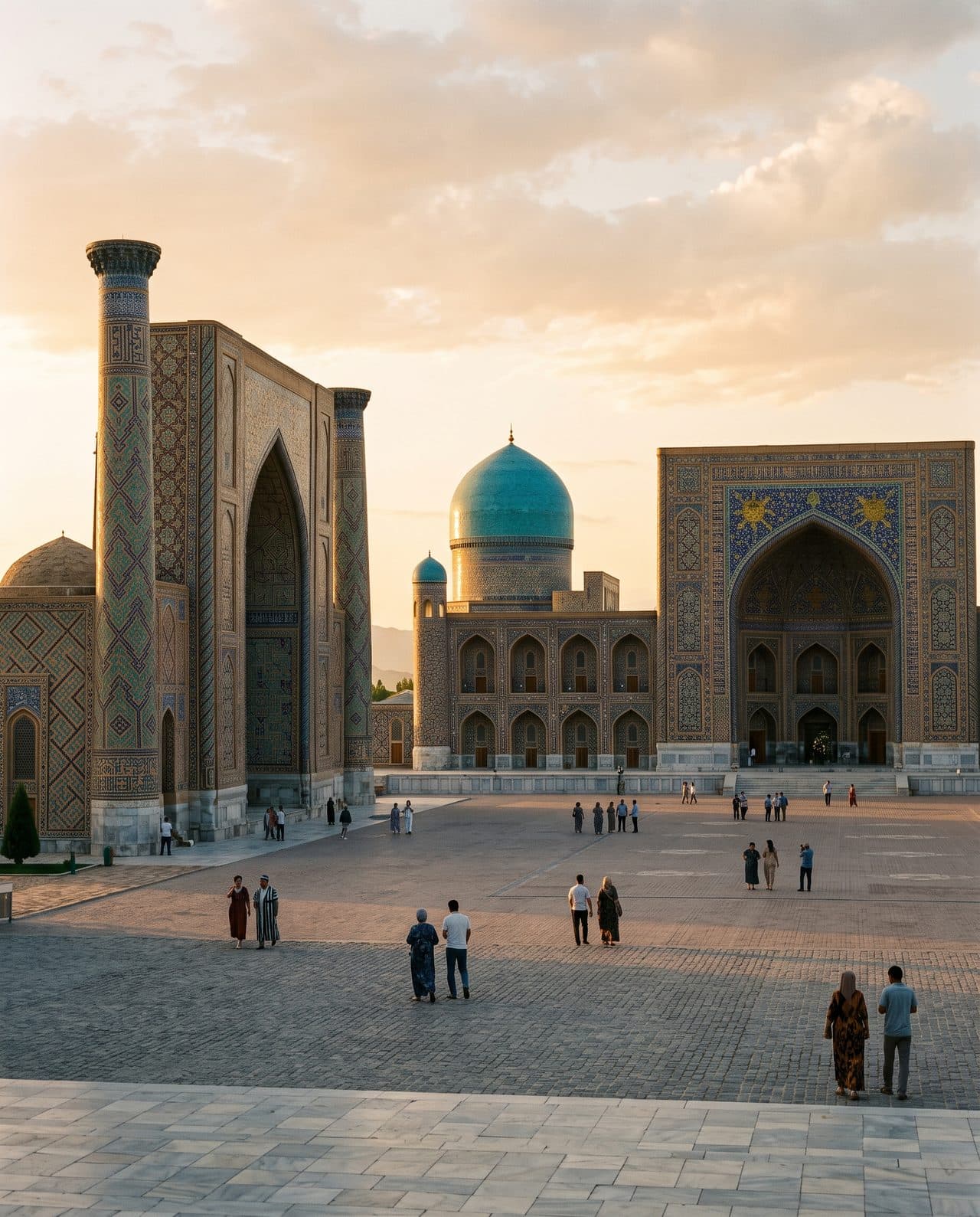
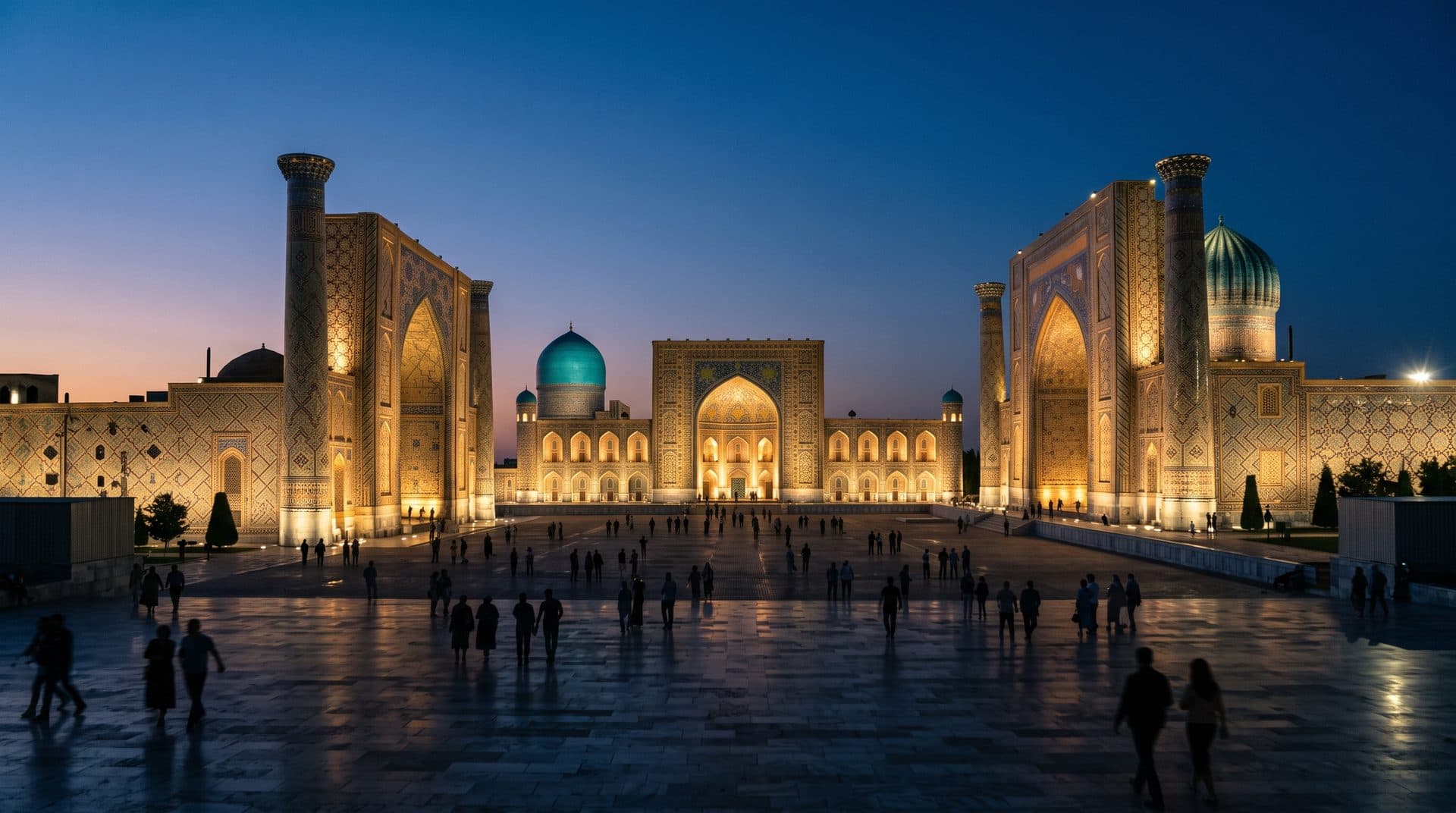
The 7:28 Afrosiyob has you in Samarkand before ten. Drop bags, then go straight to the Registan while your astonishment is fresh — mid-morning is for the tilework, when the mosaics resolve into individual cut pieces. Gur-e-Amir in the late afternoon, and the square again at dusk when the majolica catches fire. Day three belongs to Shah-i-Zinda at opening time — the one place on this route where beating the crowds changes everything — then Bibi-Khanym, warm bread at Siyob bazaar, and the paper mill at Konigil under the poplars.
Day 4 — The steppe to Bukhara
The morning train runs down the steppe in under two hours. Bukhara is a walking city, so start walking: the trading domes, Lyab-i Hauz under the mulberries, and dinner by the pond as the day-trippers drain away. The city's best hour is the one after the coaches leave.
Day 5 — Bukhara on foot
The Ark fortress and Po-i-Kalyan in the morning; the minaret that stopped Genghis Khan looks best from a rooftop teahouse opposite, and you should be on one at sunset. In between: the covered bazaars' workshops — miniature painters, blacksmiths, suzani sellers whose stock beats Samarkand's prices. Check the reverse of any embroidery; hand stitching shows its knots.
Day 6 — The desert road to Khiva
Here is the one slow road worth taking: six hours across the Kyzylkum, red sand and saxaul to the horizon, the Amu Darya crossing announcing the oasis. Arrive inside Itchan Kala's walls before the light goes and walk the ramparts while they're amber. Khiva after six belongs to the swifts and the people who stayed the night.
Day 7 — Khiva entire, then home by air
The walled city is compact enough to see whole in a morning: the Juma Mosque's forest of carved columns, Tash Khauli's courtyards, the Islam Khodja minaret if your knees agree. Lunch on shivit oshi — the green dill noodles that exist nowhere else — then Urgench airport and the short flight back to Tashkent. You will land planning the return trip; everyone does.
The honest caveats
This itinerary spends nothing on the Fergana Valley, the Savitsky collection, or the mountains — that's what second visits are for. It assumes spring or autumn; in July, shift every walking block ninety minutes earlier and add a pool. And it works best when someone else is holding the train tickets, which sell out days ahead in season. That, not coincidentally, is where we come in.