17 July 2026 · 8 min read
The Uzbek food guide: what to order, where, and when
Plov has a schedule, bread has a passport, and the best table is often a courtyard. A working guide to eating well on the road.
Uzbek food is generous, seasonal and unhurried — a cuisine built by farmers and traders who fed caravans for two thousand years. It rewards travelers who learn three things: the schedule, the regional pride, and the courage to eat where the locals queue.
Plov: the national institution
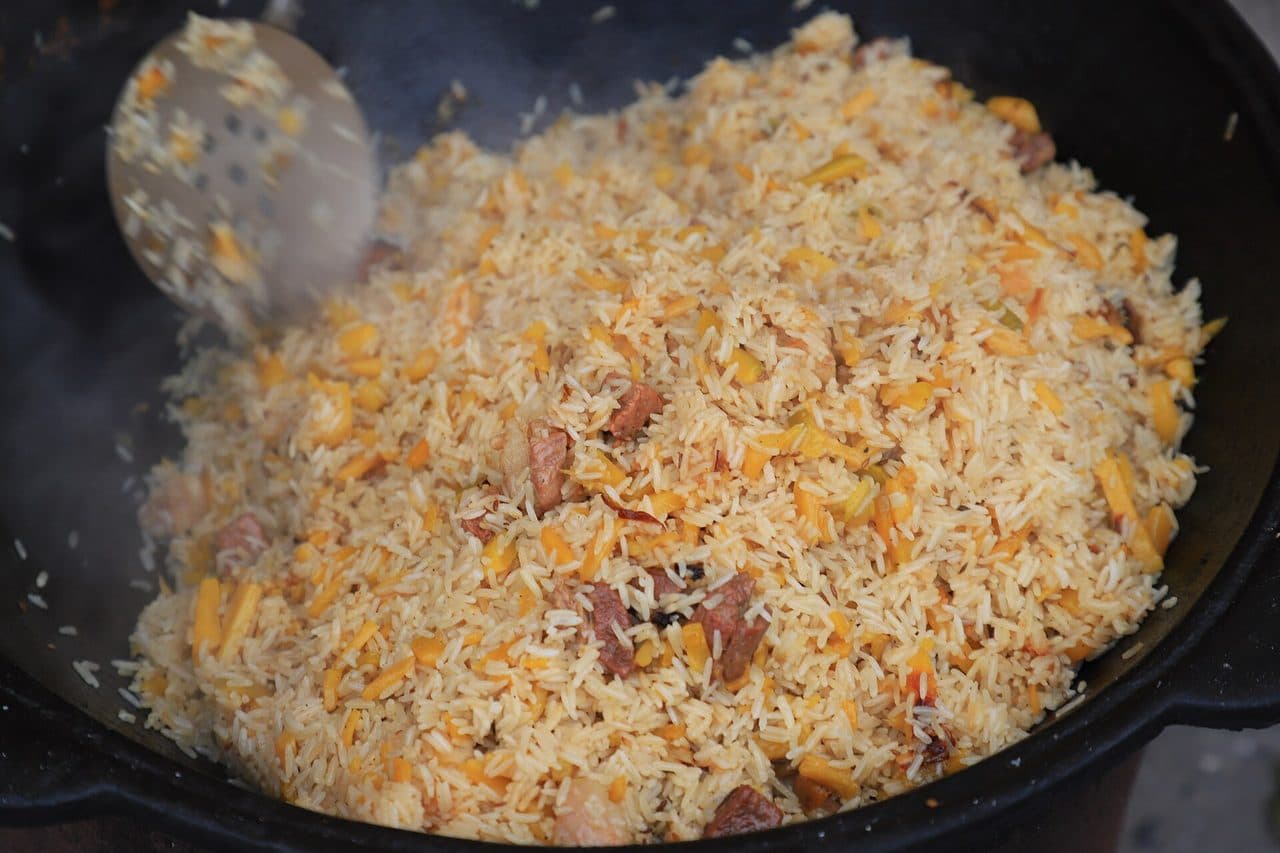
Start with the rules. Plov — rice cooked in a kazan with lamb, carrots and cumin-scented fat — is a morning-to-noon dish. The great plov centers fire their cauldrons at dawn and serve from about 10:30; by two the crust is being scraped. Every region defends its own: Tashkent stirs, Samarkand layers, Bukhara sweetens with raisins, Fergana keeps it dark and intense. Order it your first full day, at a dedicated oshxona, and accept the quail egg upgrade.
Bread with a passport
Non — the round, stamped loaf — varies city to city, and locals can identify origins at a glance. Samarkand's is dense and glossy and famously survives being carried across the country as a gift; Kokand's patir is layered with butter until it flakes. Bread arrives with every meal, is never wasted, and is torn, not cut. Watch a tandir baker slap loaves onto the oven wall and you'll understand why the queue forms.
The skewer and the dumpling
Shashlik is charcoal diplomacy — lamb, beef, or the minced lyulya, ordered by the skewer with raw onion and a splash of vinegar. Somsa, the tandir-baked pastry, is the correct mid-morning snack; the flakier, the better the neighborhood. Manti — steamed dumplings the size of a fist — are home food that restaurants do well in the valley, and Khiva answers with tuhum barak, silky egg-filled parcels found nowhere else. Lagman, the hand-pulled noodle soup, is the Uighur gift to tired travelers.
The green-tea protocol
Tea is the operating system of Uzbek hospitality. It arrives before you order and after you finish; the host pours three times back into the pot before serving, and your bowl is refilled half-full — a full bowl politely hurries a guest. Refusing outright reads colder than one symbolic sip. In a chaikhana, the pot costs nearly nothing and buys you an hour of shade and conversation.
Markets, melons and the sweet finish
Eat at least one lunch from a bazaar: Siyob in Samarkand or Chorsu in Tashkent, where dried apricots, walnuts, halva rows and horse-sausage vendors make a complete education. From July to October, Uzbek melons enter the conversation as a matter of national identity — accept every slice offered. Finish with navat crystal sugar dissolving in tea, and halva bought by the argument.
The practical notes
Vegetarians manage more easily than the menus suggest — say 'go'shtsiz' (without meat) and lean on achichuk salad, fried eggplant, pumpkin manti and the bazaars. Tap water: no; bottled: everywhere and cheap. Restaurant bills rarely include service — round up ten percent and everyone leaves pleased. And when a family invites you in — it will happen — go hungry. Refusal is the only real faux pas in the country.